A Roundup of Outages
Let’s start with a quick summary of some of the high-profile outages:
Google Cloud: A power failure in its London zone on Oct. 20th took down services for Lloyds, HSBC, Royal Mail and Revolut after the backup generators never started. (The Register)
Microsoft 365: Outlook, Exchange and Teams were down for about 24 hours on Nov. 12th–14th when a latent bug from July hit an overloaded network gateway. (The Guardian)
911: Users reported problems reaching 911 starting the night of Nov. 12th, and no official cause has been given. (Downdetector on X)
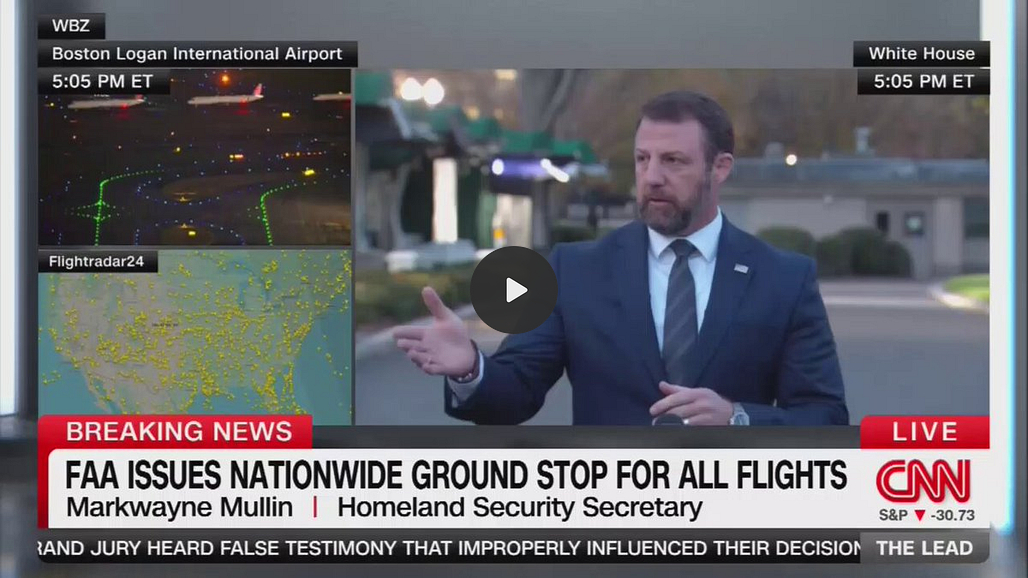
FAA: A nationwide ground stop on Nov. 13th halted flights for nearly five hours after new L3Harris routers flooded the air traffic control network. (FAA)
Workday: Payroll and HR systems went offline Nov. 13th–14th after a disaster-recovery test connected backup systems to production databases. (UC Today)
Amazon Web Services: Sign-in failures hit 11 services in Northern Virginia for about three hours on Nov. 15th, and AWS has given no root cause. (Cyber Press)
JPMorgan Chase: A software bug took down Chase’s online banking on Nov. 16th, and outage reports followed at Wells Fargo, Capital One and other banks. (CBS News)
United Airlines: A 30-minute outage on Nov. 16th hit flight-planning and crew apps, affecting fewer than 150 flights. (CNN)
Optimizely: Hackers used a flaw in its website-testing tool on Nov. 16th to plant card-skimming and crypto-stealing code on the websites of 178 organizations, including the BBC, CNN and Zoom. (Report URI)
NSA: The agency’s classified internal network went offline on Nov. 17th after routine patching. (CBS News)
Apple: iCloud, Apple Pay, Apple Music and the App Store went down on Nov. 17th, which Apple blamed on an internal update. (CNBC)
Trump Administration Denials Not Reassuring
Transportation Secretary Sean Duffy, previously notable for his expensive reality show boondoggle, came out on the 14th to reassure the public that the FAA outage “was [not] cyber at all. This was an FAA system that didn’t meet the moment” and to demand as much as $50 billion in additional funding from Congress, despite some trouble accounting for the $12.5 billion approved for the agency last year.
POTUS Trump was dismissive, telling reporters in Manila, “It’s life. When you’re big and powerful and have all the money, things like this happen. It’s fine.”
Director of National Intelligence Jay Clayton was more specific, telling Fox Business, “We do not see the indicia of a coordinated cyber attack. And we do not see the indicia of state-sponsored activity here” and tying the NSA outage to patching after a PHP vulnerability.
The PHP2Shell vulnerability has certainly been an issue for everyone trying to run websites for the past month, so it’s entirely possible that’s what caused the NSA issues.
Secretary of State Marco Rubio piled on, telling a press gaggle, “we have zero evidence whatsoever. We have no indication, no evidence, and no reason to believe at all that any of these incidents are related to each other.” And “zero evidence” of links to “nefarious actors, with cyber hackers, with criminals, with another nation state.”
But for some reason, even plausible explanations and likely truths don’t reassure when coming from the Trump administration. Maybe it’s just me.
Is AI Playing a Role?
Or maybe it’s because Secretary of Homeland Security Markwayne Mullin diverted questions about a possible role of artificial intelligence by reminding reporters, “We call it SI [superintelligence] around here, remember? SI.”